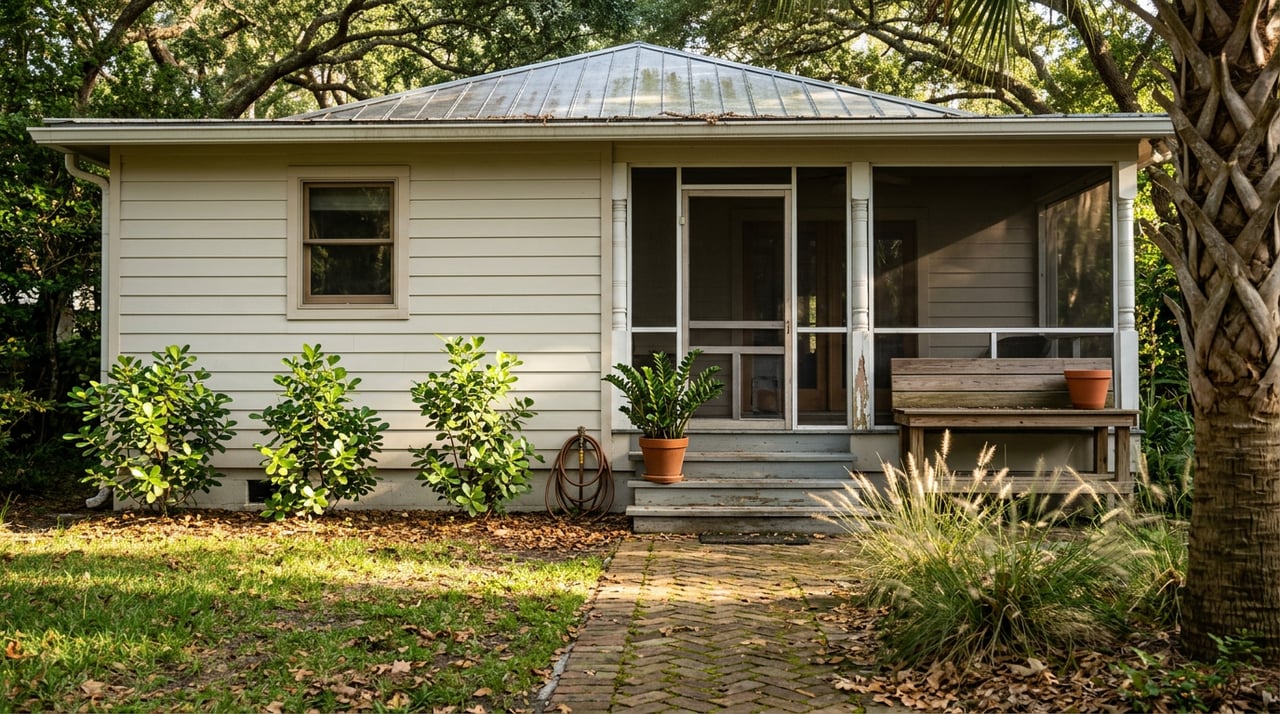
Say you're touring a 1960s block cottage two streets off Pass-a-Grille Way. The bones are good, the lot is dry, and you're already mentally spending $180,000 on a new kitchen, two bathrooms, and impact windows. Your contractor walks the numbers with you and says something that changes the whole conversation: that $180,000 isn't the number that decides your budget. The number that decides your budget is the home's market value before you touch it, because in St Pete Beach, cross half of that value in improvements and the entire house has to come up to current flood code. Not the kitchen. The whole structure.
That single rule, more than storm damage, more than tourism, more than interest rates, is the reason this market doesn't behave the way buyers expect it to.
The Number That Doesn't Add Up
Pull active listings in St Pete Beach right now and you'll see something that looks like a data error. As of early August 2026, the median list price sits at $699,000, but the median year built across those same listings is 1970. Average days on market runs 135, long for a barrier island with beach access on both sides. The average list price, meanwhile, is $1,079,469, nearly $400,000 above the median, which tells you the market isn't clustered around a typical home. It's stretched between two very different kinds of typical.
That's not a coincidence and it's not simply "old beach town, mixed inventory." It's what happens when a federal rule makes the middle of the renovation spectrum financially irrational. Homes here are either largely untouched since a decade before most current owners were born, or they're new enough to have been built entirely to today's flood code. The lightly-updated 1990s remodel that's common in inland Pinellas neighborhoods is much rarer here, because the rule punishes exactly that kind of incremental improvement.
The Rule Behind the Split
The mechanism is FEMA's Substantial Improvement rule, enforced locally as what the City of St. Pete Beach calls the 50% Rule. Because the entire city sits inside a flood zone, city code treats FEMA's floodplain requirements as governing all construction here, without exception for inland-feeling lots or long-owned family homes.
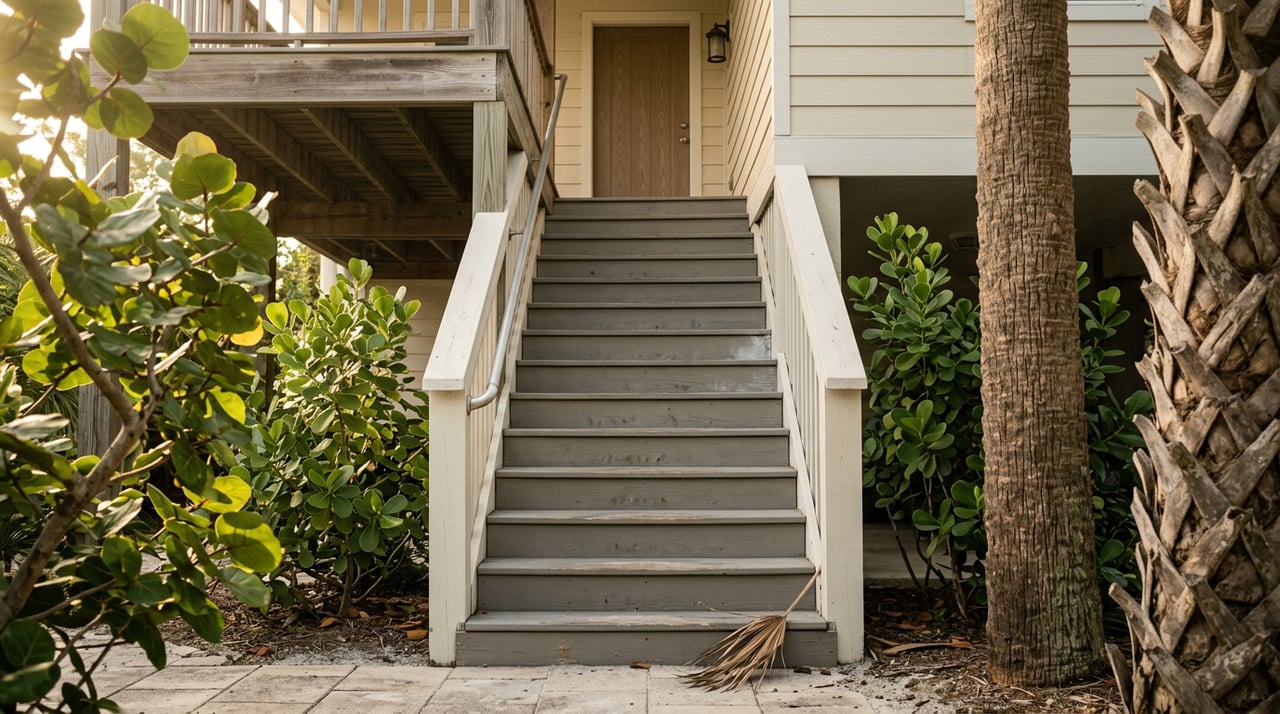
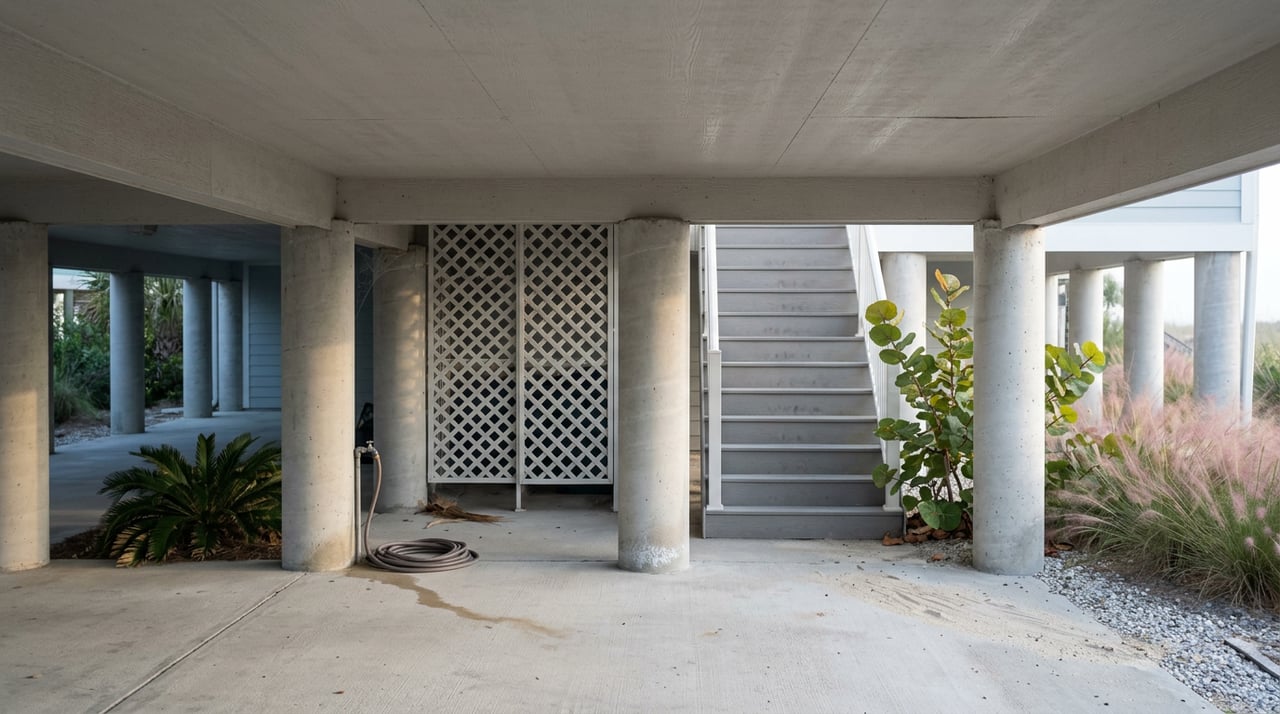
The math is simple to state and expensive to live with. If the cost of repairing, remodeling, or adding onto a home equals or exceeds 50 percent of that structure's market value before the work starts, the entire building must be brought into compliance with current flood elevation standards. Not just the room you're renovating. The whole house, lifted or rebuilt to base flood elevation plus a foot of freeboard, with flood-resistant materials below that line.
Two details make this harder to plan around than it sounds. First, the 50 percent threshold is calculated over a rolling 12-month window, not per permit, so three separate small projects in the same year get added together when the city checks your math. Second, if a home has already been declared substantially damaged, by a storm rather than a renovation choice, any repair work at all is treated as substantial improvement regardless of what it actually costs. There's no partial credit for staying under budget once that determination is made.
The practical effect: a homeowner planning a $180,000 kitchen and primary suite update on a home assessed near $300,000 is already at 60 percent. That project doesn't get to happen as planned. It either shrinks dramatically to stay under the threshold, or it becomes a full elevation project, and the cost difference between those two outcomes is not incremental.
Here's roughly what that decision tree costs on a typical 2,000 to 3,000 square foot St Pete Beach home, based on figures from Pinellas contractors who work these projects regularly:
| Path | What it involves | Typical cost |
|---|---|---|
| Stay under the threshold | Cosmetic and scope-limited repairs, no elevation required, cumulative cost tracked over a rolling year | Capped near 50% of the home's pre-work market value |
| Lift the existing structure | Structural lift to base flood elevation plus freeboard, house set back down on new foundation | $150,000-$250,000 for the lift alone, $600,000-$1.2M total for a full elevation-scope rebuild |
| Teardown and rebuild at code | New construction to current wind and flood standards, impact windows, elevated foundation | $1.2M-$1.5M for a code-compliant rebuild in St Pete Beach, Pass-a-Grille, and Tierra Verde |
There's very little standing between those rows. That's the missing middle showing up as a construction estimate instead of a listing description.
What "Renovated" Actually Means on a Showing
Once you know the rule, listing language starts reading differently. A recent estate sale on Sunset Way in Pass-a-Grille was marketed around its original construction, a new roof going in, and a foundation described as sound after decades in place, exactly the profile of a home that has stayed under the 50 percent line for years by design. Compare that to a new-construction listing on Pass A Grille Way built with concrete and block, three elevated levels, and Gulf and bay views from the top floor. That's a home built after the previous structure was taken all the way past the threshold, elevated to current code from the footings up.
Both are legitimate ways to own on St Pete Beach. What buyers get less often is the option in between, a home that's been thoughtfully updated over time without a full elevation event. That option isn't unavailable because nobody wants it. It's unavailable because the rule makes it financially irrational to build.
Pass-a-Grille's Complicated Exception
There's one carve-out worth knowing if you're drawn to the historic cottages south of the Don CeSar. Structures on the local historic property registry, or contributing to the Pass-a-Grille Historic District, may be exempt from the 50 percent rule. On paper, that should let owners of the neighborhood's oldest homes renovate without triggering full elevation.
In practice, the exemption hasn't fully protected the historic stock. Hurricanes Helene and Milton, in September and October of 2024, destroyed dozens of Pass-a-Grille's historic homes and damaged hundreds more. The city's Certified Local Government status has helped some owners voluntarily list their homes as historic resources so they can rebuild with original form and features intact, but dozens of historic homes have still been demolished since the storms. In January of this year, city planners presented a design guidebook to the Historic Preservation Board meant to help remaining owners navigate the ordinance, using examples like the 1930s Tudor Revival homes at 1601 and 1603 Pass A Grille Way, already elevated well above grade by their original design, and a 2004 build on Gulf Way held up as a model for how new construction can still read as Pass-a-Grille.
The exemption's limits showed up clearly in a 2025 case at 100 Pass-A-Grille Way, where two residential buildings converted from 1940s army barracks sat on a 0.28-acre lot purchased for $2.25 million in 2021. The Historic Preservation Board approved demolition of both contributing structures that spring. The developer's own filing argued that FEMA elevation requirements, combined with modern accessibility and code standards, had made the original 500-square-foot units effectively unusable, regardless of the historic designation attached to them. Being exempt from the 50 percent calculation doesn't exempt a property from every other code requirement layered on top of it.
The Window That Just Closed
Earlier this year, the city tried to give storm-affected owners some breathing room. A narrow amnesty period ran from February 11 through June 30, 2026, allowing a short list of minor repairs, carpet replacement over existing finished flooring, temporary tarps, debris removal, small shingle repairs, and minor leak fixes that didn't touch structural, mechanical, plumbing, or electrical systems, without those repairs counting toward the 50 percent calculation.
That window is closed now. If you're looking at a St Pete Beach property today, any repair work happening on it falls back under the standard rolling 12-month rule, no exceptions for storm timing.
Before You Write an Offer
If you're serious about an older St Pete Beach home, ask these questions before your inspection period starts, not after:
- What is the property's current permit history, and has any work in the past 12 months already used up part of the 50 percent threshold.
- Has the home ever been issued a substantial damage determination, and if so, what was the market value basis used for that finding.
- Is there a current elevation certificate on file, and what is the first floor height relative to base flood elevation.
- If the home is in the Pass-a-Grille Historic District, is it formally listed as contributing, and what would that mean for a future renovation scope.
- What has the seller actually spent on repairs or improvements since 2024, including any work done under the now-closed amnesty period.
A seller's disclosure won't always volunteer this. It's a conversation for your agent to have directly with the city's building division before you're deep into a 15-day inspection clock.
What This Means Depending on What You Want
If you want a character home you can update slowly over years, St Pete Beach makes that harder than it looks from the listing photos. The rule rewards either doing nothing or doing everything, and there's real financial risk in landing in between without knowing it.
If you want new construction, this market gives you plenty of it, built to a standard the older stock can't easily match, and priced accordingly.
If you're set on an older home specifically for its scale and story, budget your renovation plan around the 50 percent line first, and let your finish list follow from what's actually possible under it.
A Few Questions Worth Asking Directly
Does the 50 percent rule apply if I pay cash and skip a lender? Yes. The rule is a condition of the city's participation in the National Flood Insurance Program, not a lending requirement, so it applies regardless of how the purchase or renovation is financed.
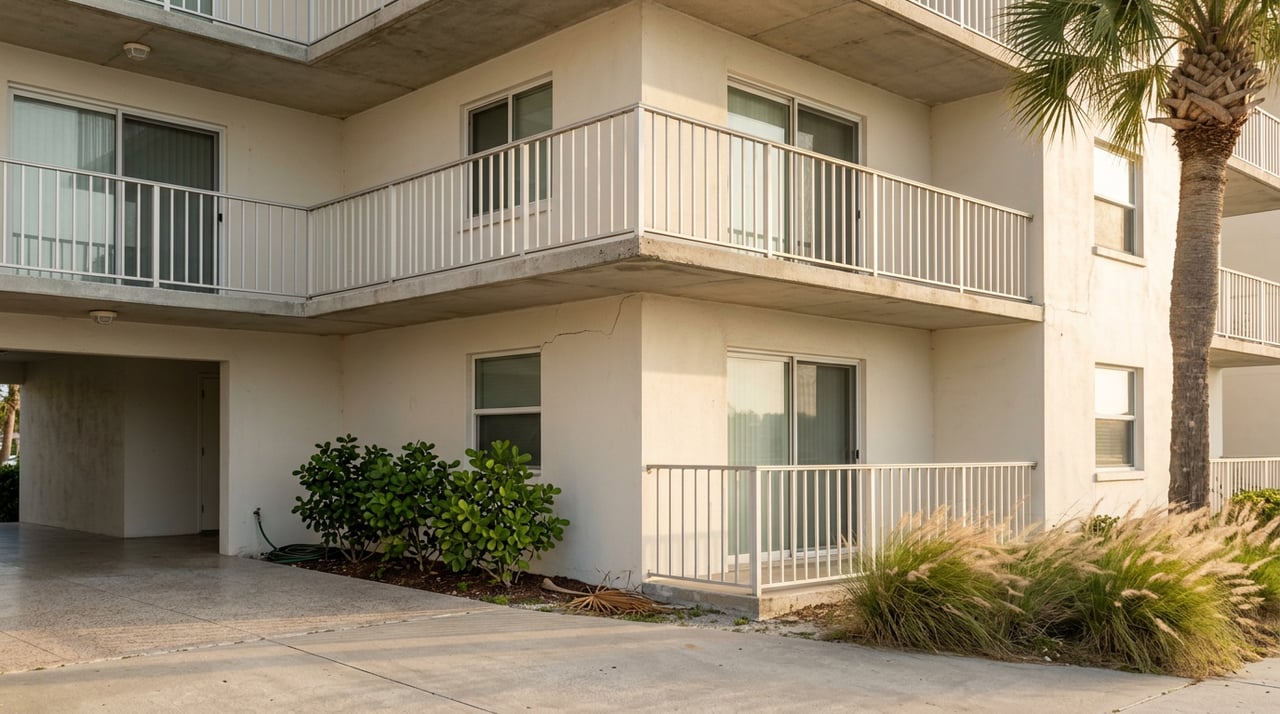
Does this apply to condos the same way it applies to single-family homes? The Substantial Improvement calculation is based on the structure, so it applies to a condo building's common elements and any unit-level structural work, though HOA-managed buildings often handle the compliance filing at the association level rather than the unit owner level.
Can I phase a renovation over several years to stay under the threshold? You can, but the city tracks cumulative cost on a rolling 12-month basis from your first permit date, so spacing out permits by a few months within the same year doesn't reset the clock the way some owners assume.
If you're weighing an older St Pete Beach cottage against new construction, or you're not sure how a specific address's permit history stacks up, I'd rather walk through the real numbers with you before you fall in love with a floor plan that can't be built the way you're picturing it. Let's Connect, and we'll pull the property's history together before you write an offer.