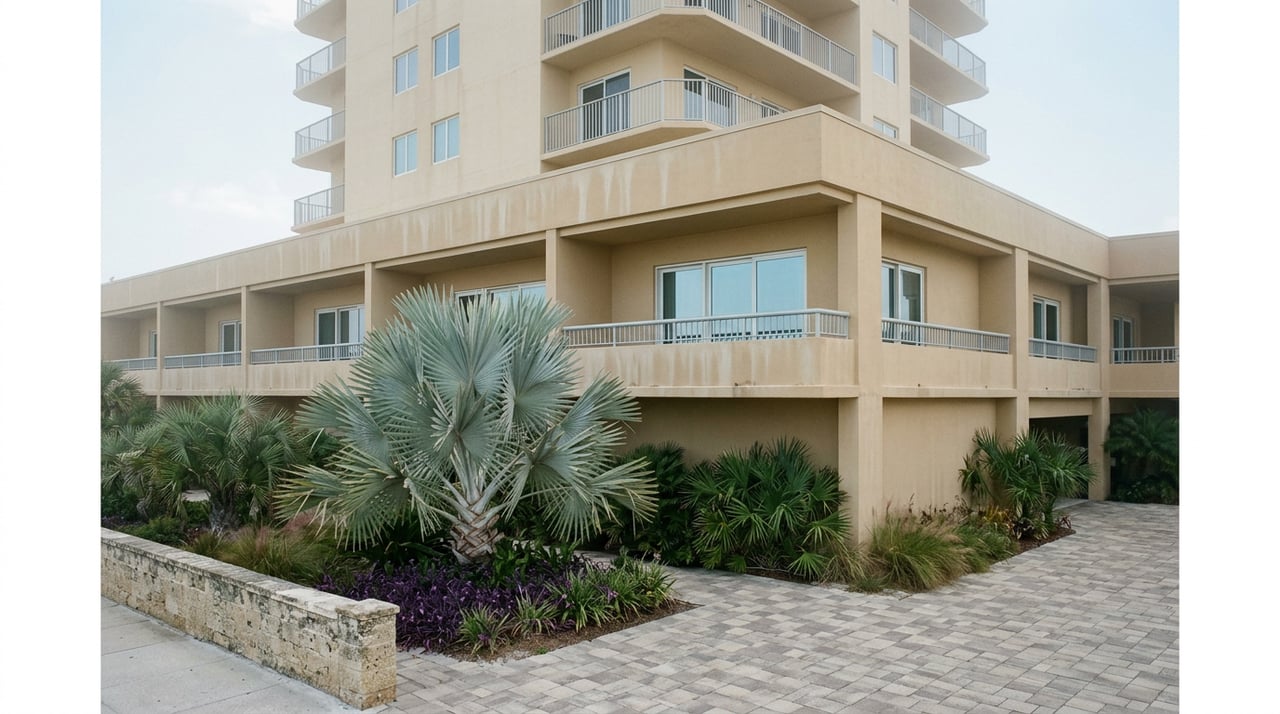
In September 2024, an engineering firm called Karins Engineering walked a 46-year-old condominium building on Sand Key and signed off on it. The milestone inspection required under Florida's 2022 post-Surfside law found the building in good condition, structurally sound enough to keep collecting maintenance fees and hosting the usual pool deck routines. By early May 2025, a contractor doing unrelated slab repairs in the parking garage found major cracks and voids in a support column. News coverage picked up by Insurance Journal noted the uncomfortable echo: investigators have pointed to column failure as a factor in the 2021 collapse of Champlain Towers South in Surfside.
The building, known as South Beach III, did not collapse. Nobody was hurt. But the sequence, cleared in September, cracked open in the garage eight months later, is the single most useful data point a Clearwater Beach or Sand Key condo buyer can study right now. It says something that no listing description with the words "recently passed milestone inspection" will tell you: a passed inspection is a snapshot of one day, not a warranty against the next one.
A milestone inspection tells you less than the name suggests
Florida Statute 553.899 requires milestone inspections for residential condominium buildings three or more habitable stories tall, first at 30 years of age, or 25 years if the building sits within three miles of the coast, and every ten years after that. The inspection itself has two phases. Phase 1 is a licensed engineer's visual walk of the structural components: foundation, load-bearing walls, columns, floors, roof structure. If Phase 1 finds no substantial structural deterioration, the building passes and nothing further happens. Phase 2, which involves invasive testing like coring into concrete, only gets triggered if Phase 1 turns up a problem serious enough to warrant it.
That's the gap. An engineer walking a parking garage in September has no obligation to core-drill a column that looks fine from the outside. South Beach III's Phase 1 report reportedly found nothing wrong before the cracks turned up during work that had nothing to do with the inspection itself.
Sand Key is almost entirely condo-dominated, and much of that inventory is old enough to already be inside the state's inspection clock. The Isle of Sand Key, built in 1974, is a 16-story tower with 103 units. Dan's Island, built in 1982, is a 12-story building with 103 units. Marina House, a smaller 3-story building from 1970 with 54 units, still meets the statute's three-story threshold and is subject to the same rules as its taller neighbors. Sitting a few hundred feet from the Gulf puts nearly all of them under the tighter 25-year trigger rather than the standard 30.
What actually changed on January 1, 2026
Milestone inspections get the headlines, but the number that actually moves your monthly dues or your special assessment risk lives in a separate document: the Structural Integrity Reserve Study, or SIRS. Florida's House Bill 913, effective July 1, 2025, extended the deadline for a building's first SIRS from December 31, 2024 to December 31, 2025, and raised the threshold for what counts as a major structural component to $25,675 for 2026, adjusted annually for inflation.
The part that matters more to your wallet than the deadline extension is the funding rule. The Florida Department of Business and Professional Regulation says associations can no longer waive reserve funding for the eight SIRS structural components (roof, load-bearing structure, fire protection, plumbing, electrical, waterproofing, windows and exterior doors, and any qualifying item over that threshold) for budgets adopted on or after January 1, 2025. Full funding under the study's schedule has to begin January 1, 2026.
As of this year, that option is gone for the components most likely to bankrupt an association if they fail. What a building's board does with that mandate, raise dues gradually or hit owners with a special assessment, is now the real variable buyers need to price in.
Two different documents, two different jobs
Buyers often assume a milestone inspection and a SIRS are the same paperwork. They're not, and the confusion costs people real diligence time.
| Milestone Inspection | SIRS | |
|---|---|---|
| Governed by | Florida Statute 553.899 | Florida Statute 718.112(2)(g) |
| What it checks | Visual structural condition (Phase 1), invasive testing if triggered (Phase 2) | Condition and remaining useful life of 8 structural components, plus a funding schedule |
| Triggered by | Building age (30 years, or 25 within 3 miles of coast) | Building height (3+ habitable stories), regardless of age |
| Repeat cycle | Every 10 years after initial inspection | At least every 10 years after the condominium's creation |
| Consequence of a problem | Repairs required within 365 days of a failed inspection | Reserve funding locked in, can't be waived for these components |
They can be completed together when both are due by December 31, 2026, and Mosaic HOA says a milestone inspection performed within the past five years can sometimes stand in for the SIRS visual inspection. But a clean milestone inspection tells you the building didn't fail a structural walkthrough. It does not tell you whether the association's reserve fund can actually pay for the roof, plumbing, or waterproofing work that's coming due over the next 25 years.
The reserve schedule decides your financing too
Because Sand Key and most of Clearwater Beach are condo-heavy, your loan approval depends on the building's finances almost as much as your own. Lenders and secondary-market buyers like Fannie Mae evaluate whether a condo project is "warrantable," meaning it meets standards around reserves, insurance, litigation, and deferred maintenance. A building with a thin reserve fund, a pending special assessment, or unresolved Phase 2 findings can lose that status, which pushes buyers toward smaller portfolio lenders, larger down payments, and longer closing timelines.
Flood insurance adds another layer. Most Sand Key and Clearwater Beach buildings sit in FEMA-designated AE or VE flood zones, and any federally backed mortgage in a Special Flood Hazard Area requires flood coverage as a condition of closing. You can confirm a specific address's zone through FEMA's Flood Map Service Center before you ever write an offer. A soft asking price on an older tower is not automatically a bargain if the reserve study behind it means dues are about to climb, or if the flood zone and building age combine to push your total insurance cost past what the listing agent quoted.
Before you write an offer
A handful of documents and questions will tell you more than the milestone inspection headline ever will:
- Ask for the SIRS report date and whether it was a full study with a site visit or a financial-only update.
- Ask whether the building's most recent milestone inspection triggered a Phase 2, and if so, whether that work is complete.
- Request the reserve funding schedule from the SIRS and compare it against the association's current monthly dues.
- Ask whether the board has approved a special assessment, loan, or line of credit to close any funding gap identified in the study.
- Confirm the building's flood zone through FEMA's map tool and ask your lender how that affects required coverage.
- Ask your lender directly whether the specific building is Fannie Mae warrantable before you get attached to a unit.
What this means depending on which side of the transaction you're on
If you're buying, treat "passed inspection" as the start of your homework, not the end of it. The inspection tells you the building didn't fail a visual structural check on a given day. The SIRS and the association's actual funding behavior tell you what's likely to happen to your dues and your resale value over the next decade.
If you're selling, getting ahead of full reserve funding now protects you later. A buyer's lender will eventually ask the same questions listed above, and an association that can show a funded, on-schedule reserve plan closes faster and holds its price better than one that's still figuring out how to cover a gap the board deferred for years.
A few questions worth asking directly
Does a passed milestone inspection mean the building doesn't need more testing? Not necessarily. Phase 2 invasive testing only happens if Phase 1's visual inspection finds a specific level of deterioration. A building can pass Phase 1 and still develop a problem that surfaces later, as happened at South Beach III.
What's the difference between a milestone inspection and a SIRS, in plain terms? The milestone inspection is a structural health check required at intervals tied to a building's age. The SIRS is an ongoing financial plan that tells the association how much money it needs to set aside, and by when, to maintain the structural components that matter most.
If I'm paying cash, do any of these financing rules apply to me? The Fannie Mae warrantability and flood insurance mandates are tied to federally backed loans, so a cash purchase sidesteps those specific requirements. The underlying risk doesn't disappear, though. An underfunded reserve still means a special assessment can land on your desk regardless of how you financed the purchase.
Older buildings on Sand Key and Clearwater Beach are not a reason to avoid this market. They're a reason to read past the inspection headline and into the numbers underneath it. If you're weighing a specific building, or trying to figure out what a listing's HOA disclosures are actually telling you, Fast Florida Real Estate can walk through the documents with you before you write an offer. Let's Connect.
This article is general information, not legal, tax or financial advice. Consult a qualified professional about your situation.