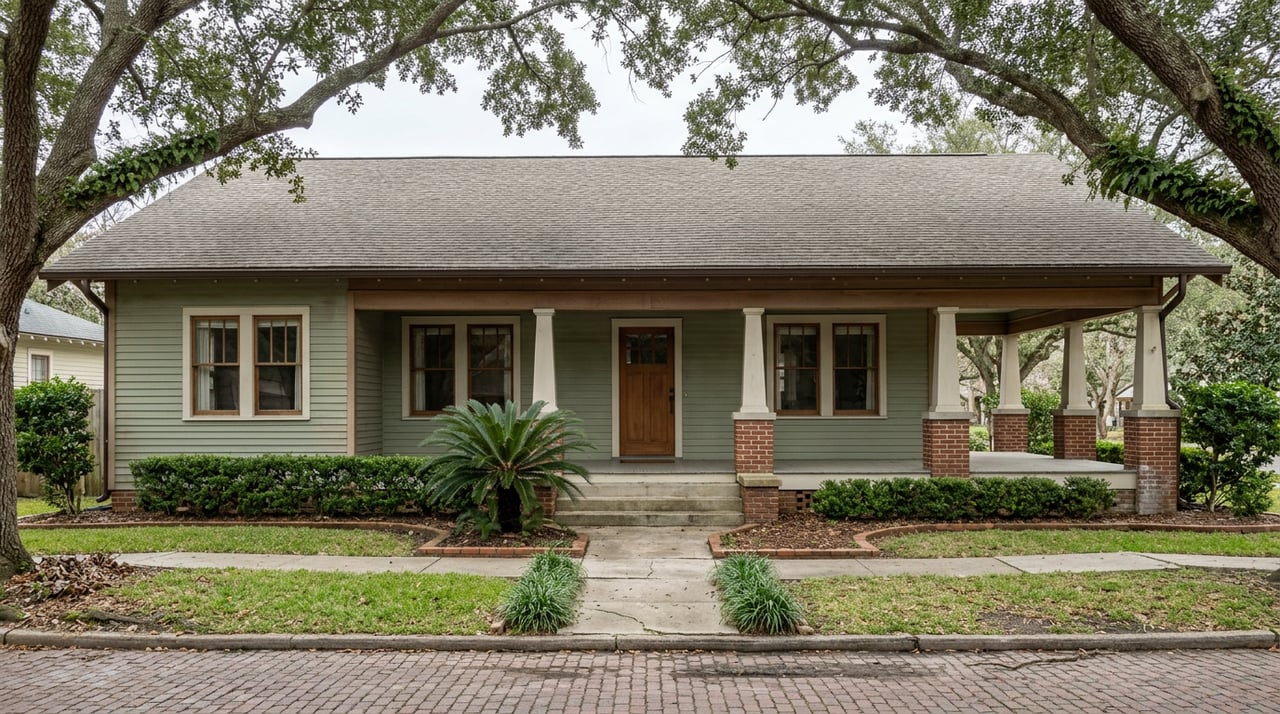
Every few months I get a version of the same call. A buyer is under contract on a 1920s bungalow in Old Northeast, or a foursquare in Historic Kenwood, and they have just discovered the house sits inside a historic district. Their question is never "should I still buy it." It is "what am I allowed to do to it." Usually they assume the answer is close to nothing. Usually they are wrong, and the actual rule is more interesting than the assumption.
Here is the friction that matters if you are buying, selling, or renovating in either neighborhood: the phrase "historic district" does not mean one thing in St. Petersburg. It means at least three different things, and only one of them requires the city's sign-off before you touch a window or repaint a porch rail. Get the tiers confused and you either ask permission you never needed, or you skip an application that would have frozen your property taxes for a decade.
Three Different Kinds of Historic, Only One With Teeth
Most of Old Northeast sits within the North Shore Historic District, which is listed on the National Register of Historic Places. That listing carries prestige and, for income-producing properties, federal tax credit eligibility. What it does not carry, on its own, is any city review of what you do to the exterior of your house. Preservation groups in St. Petersburg have been explicit about this: National Register designation does not limit what an owner can do with a privately owned property unless it has also received a specific local designation.
Local designation is the second tier, and it comes in two forms. A property can be named an individual local landmark, or it can sit inside a formally adopted Local Historic District. Old Northeast has ten individually designated local landmarks, among them the Vinoy Park Hotel, the Pineapple House on 6th Avenue NE, and the Monticello Apartments. It also contains exactly one Local Historic District: Granada Terrace, designated by the city in 1988. Those are the properties where the Certificate of Appropriateness, or COA, actually applies.
| Designation | Who reviews exterior changes | Applies to |
|---|---|---|
| National Register (contributing property, no local designation) | Nobody at the city | The bulk of Old Northeast and Historic Kenwood |
| Individual local landmark | City preservation staff, via COA | 10 properties in Old Northeast |
| Local Historic District | City preservation staff, via COA | Granada Terrace only, within Old Northeast |
If your house is a contributing structure in the North Shore Historic District but not one of those ten landmarks and not inside Granada Terrace, you can replace windows, repaint, and re-roof without a city design review. That is not a loophole. It is simply how the ordinance is written, and it is the detail that gets lost every time someone shorthands the whole neighborhood as "historic" without asking which tier their specific parcel falls into.
The Process Isn't the Obstacle People Expect
For the small number of properties where a COA is actually required, the Historic Old Northeast Neighborhood Association has tracked the outcome since the program started in 1987: 97 percent of COA applications have been approved. That is not a rubber stamp process designed to say no. It is a design review meant to keep street-facing changes compatible with the block, and the overwhelming majority of applicants clear it.
The mistake I see most often runs the other direction. A buyer assumes their contributing-but-not-landmarked property carries the same restrictions as Granada Terrace, treats every exterior project as if it needs a hearing, and either delays a renovation unnecessarily or negotiates a purchase price as if the house came with more red tape than it actually does. If you are making an offer on a property in Old Northeast or Kenwood, the first question to ask your agent or the city's Urban Design and Historic Preservation staff is not "is this house historic." It is "which of the three tiers is this specific parcel in."
The Money Side People Miss
Here is where getting the tiers right pays off literally. St. Petersburg and Pinellas County both offer an Ad Valorem Tax Exemption for eligible historic properties, and eligibility extends beyond the ten landmarks and Granada Terrace. It is available to any property individually listed in the National Register or the St. Petersburg Register, or contributing to a historic district, which covers the vast majority of Old Northeast and Kenwood housing stock.
The mechanics, straight from the city's own program page: the exemption freezes the increase in city and county property taxes that would otherwise result from a qualifying renovation, for a period of ten years, exempting up to 12.1 mills. To qualify, your construction costs need to total at least 10 percent of the property's assessed taxable value, and the project has to be reviewed and approved by the city before construction starts. For a single-family home, the maximum incentive tops out at $100,000. City Council approves the exemption after the work is completed, not before, so the paper trail matters as much as the renovation itself.
That means a homeowner who assumes "we're not landmarked, so none of the historic programs apply to us" is often walking away from a real tax benefit they already qualify for, simply because they conflated designation status with landmark status. If you are budgeting a kitchen and system update on a contributing Old Northeast property, it is worth a call to the city's preservation office before you start, not after.
The Rule That Has Nothing to Do With Historic Status
Separate from all of this, and just as easy to overlook, is St. Petersburg's own floodplain rule. Most people who have heard of Florida's substantial improvement standard know it as the 50 percent rule: if repair or renovation costs exceed half a property's pre-storm market value, the structure has to meet current base flood elevation requirements. St. Petersburg's own recovery guidance sets that threshold one point lower. The city follows a 49 percent rule, meaning a property in a flood zone that crosses 49 percent of its pre-storm value in repair or improvement costs triggers the elevation requirement, not 50.
That single percentage point matters if you are planning a large-scale historic rehab in a neighborhood where Hurricane Helene's storm surge reached six to seven feet in September 2024 and flooded blocks that had never flooded before. A renovation budget built around the 50 percent threshold from a national guide can land you in violation of St. Petersburg's actual 49 percent standard. The historic designation programs and the flood substantial improvement rule are two separate tracks that do not automatically defer to each other. A project can clear the Certificate of Appropriateness process cleanly and still trip the city's elevation trigger if the numbers land in that one-point gap.
Before You Write an Offer or Start a Renovation
A few questions worth asking before you make decisions based on assumptions about what "historic" means for a specific address:
- Is this property individually landmarked, inside Granada Terrace, or simply a contributing structure in the National Register district? That answer determines whether you need a COA at all.
- If a COA is required, what has the city's preservation staff approved on this block before? Precedent on your specific street tells you more than the ordinance text alone.
- Does this property qualify for the Ad Valorem Tax Exemption, and if so, what does the city need to see before construction starts versus after?
- If the parcel sits in a flood zone, where does the planned renovation budget land relative to St. Petersburg's 49 percent substantial improvement threshold?
- Has a 4-point inspection been done recently, and does it flag galvanized or polybutylene plumbing, an outdated panel, or aluminum branch wiring, all common in bungalows from this era and all relevant to what an insurer will require regardless of historic status?
A Few Questions Worth Asking Directly
Does National Register listing affect my ability to get homeowners insurance? Not by itself. Insurers care about the same four systems on every older home: roof, electrical, plumbing, and HVAC. A 1920s bungalow with original wiring will raise the same 4-point inspection questions whether it sits in a historic district or not.
If my house isn't in Granada Terrace and isn't one of the ten landmarks, can I still apply for the tax exemption? Yes, as long as it is individually listed or contributes to a recognized historic district, which describes most of Old Northeast and Kenwood. Confirm your property's specific status with the city's preservation office before you finalize a renovation budget.
Does interior work require a Certificate of Appropriateness? Interior changes are not reviewed unless they are part of an application for the ad valorem tax exemption program. The COA process is about what is visible from the street.
If you are looking at a property in Old Northeast, Historic Kenwood, or anywhere else in St. Petersburg where the word "historic" is doing more work in the listing than in the actual ordinance, I would rather walk you through the specific designation on that specific parcel before you write an offer than have you find out the difference during a renovation. Fast Florida Real Estate is Ryan Chamberlain's practice, built around exactly this kind of Florida-specific detail work. Let's Connect before you assume anything about what a house will or will not let you do.